
Leah Fitzgerald, Specs & care editor
I'm the specs and care editor, so I spend my time in the parts of a manual most people skim: the clearance diagram, the operating temperature range, the cleaning section, and the warranty PDF with its list of exclusions.
Food temperature is the subject I care most about. The display on the lid shows what one sensor reads, and that isn't always what the chicken at the bottom of the basket is doing. I write that guide from published food-safety guidance rather than habit, and I'd rather you drop a cheap thermometer in the basket than trust a single number.
Ventilation is my other hobbyhorse. Compressor fridges need room to breathe, and the manual nearly always says how much. Shoved against a seat back or buried under sleeping bags, a fridge has to work harder to hold its setting. I compare those clearances model by model and put them on the page.
I also keep the cleaning and storage guide in line with what each manufacturer asks for, because a lid shut tight for the winter is how the smell starts. None of this involves running the units myself. It's reading, comparing, and being stubborn about the fine print.
Areas of expertise
- Food temperatures and thermometer readings
- Ventilation clearances and placement
- Cleaning, drying and storage between trips
- Manuals, spec sheets and warranty terms
How I work
- I take clearance and temperature figures from the manual itself, not the marketing copy.
- For food storage I start from FoodSafety.gov, then check what the manual adds for that exact model.
- I read the full warranty terms: what's covered, for how long, and what voids it.
- When a number is missing from the paperwork, the page says so.
Articles by Leah Fitzgerald
Written
 Portable refrigeration
Camping food temperatures: monitor the food-storage system
Plan cold storage, separation, serving time and power interruptions using government food-safety guidance.
Read the guide Portable refrigeration
Portable Fridge Placement: Ventilation and Access
Check the installed envelope, airflow path, lid movement and cable route before loading the vehicle.
Read the guide Portable refrigeration
How to clean and store a portable fridge
Build a manual-led routine for emptying, gentle cleaning, drying and inspection between trips.
Read the guideEdited
 Portable refrigeration
Portable fridge capacity: plan meals and usable space
Translate meal containers, shopping intervals and cargo measurements into a practical capacity shortlist.
Read the guide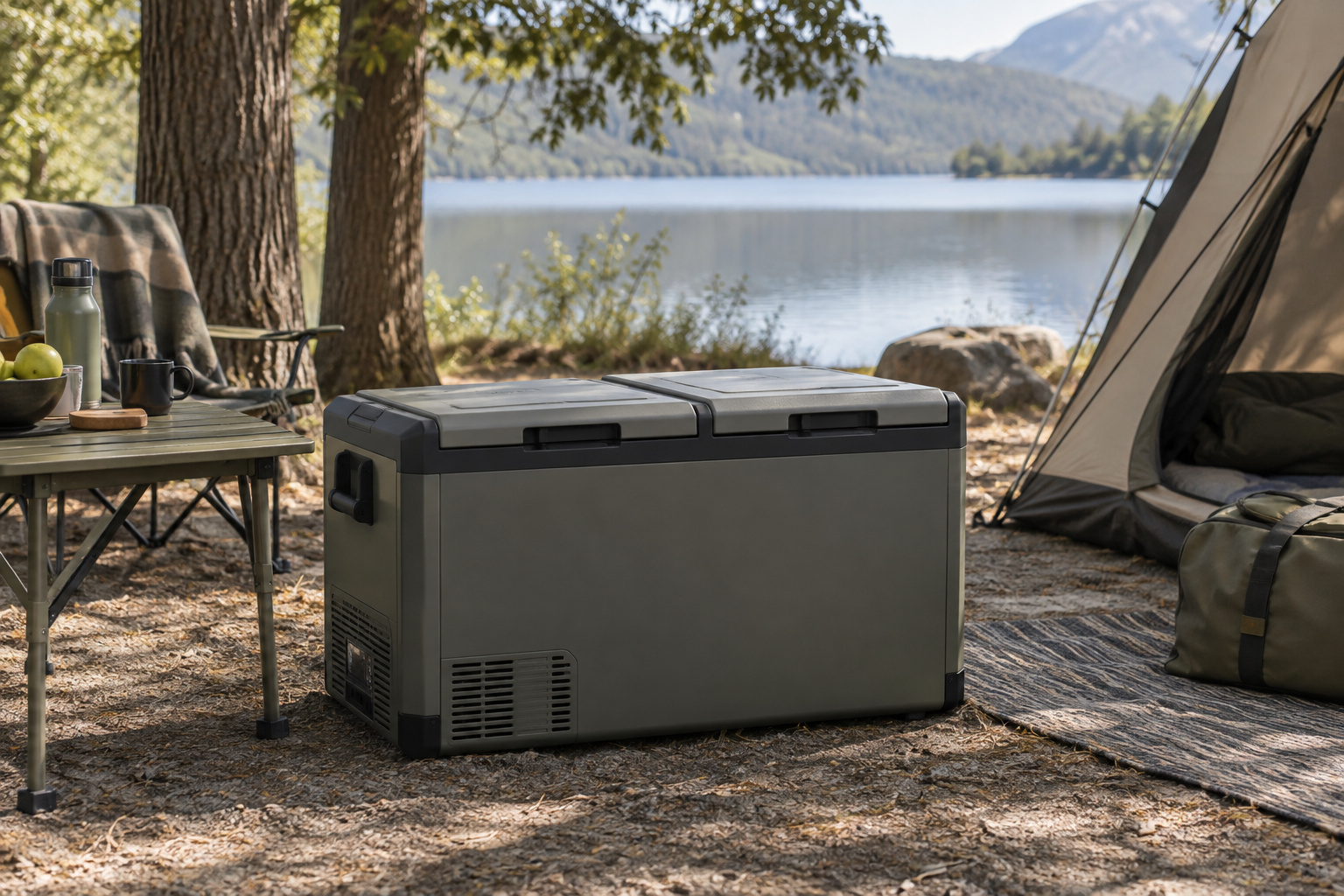 Portable refrigeration
Dual-zone portable fridges: what to verify
Separate independent temperature control from dividers, baskets and ambiguous dual-zone marketing.
Read the guideHow we compare and rate the fridges is explained on How we rate. The rest of the team: Our editors.